RIMAGEX helps fashion designers, independent brands and creative teams turn real garments and visual direction into a coherent series of fashion images. The process begins with the product—not with a random prompt—and keeps the creative decisions visible throughout production.
The objective is not to generate one impressive frame. It is to build a sequence in which the clothes remain recognizable and every image feels part of the same collection.
01
Define what the lookbook needs to do
Start with the purpose of the images. A wholesale presentation, an e-commerce collection, a press preview and a social launch require different framing, pacing and levels of product detail. Define the audience, number of looks, image formats and where the final sequence will be used.
A useful brief can be simple: ten looks, vertical 4:5 images, one consistent model, a minimal architectural location and enough garment detail for buyers to understand each piece.
02
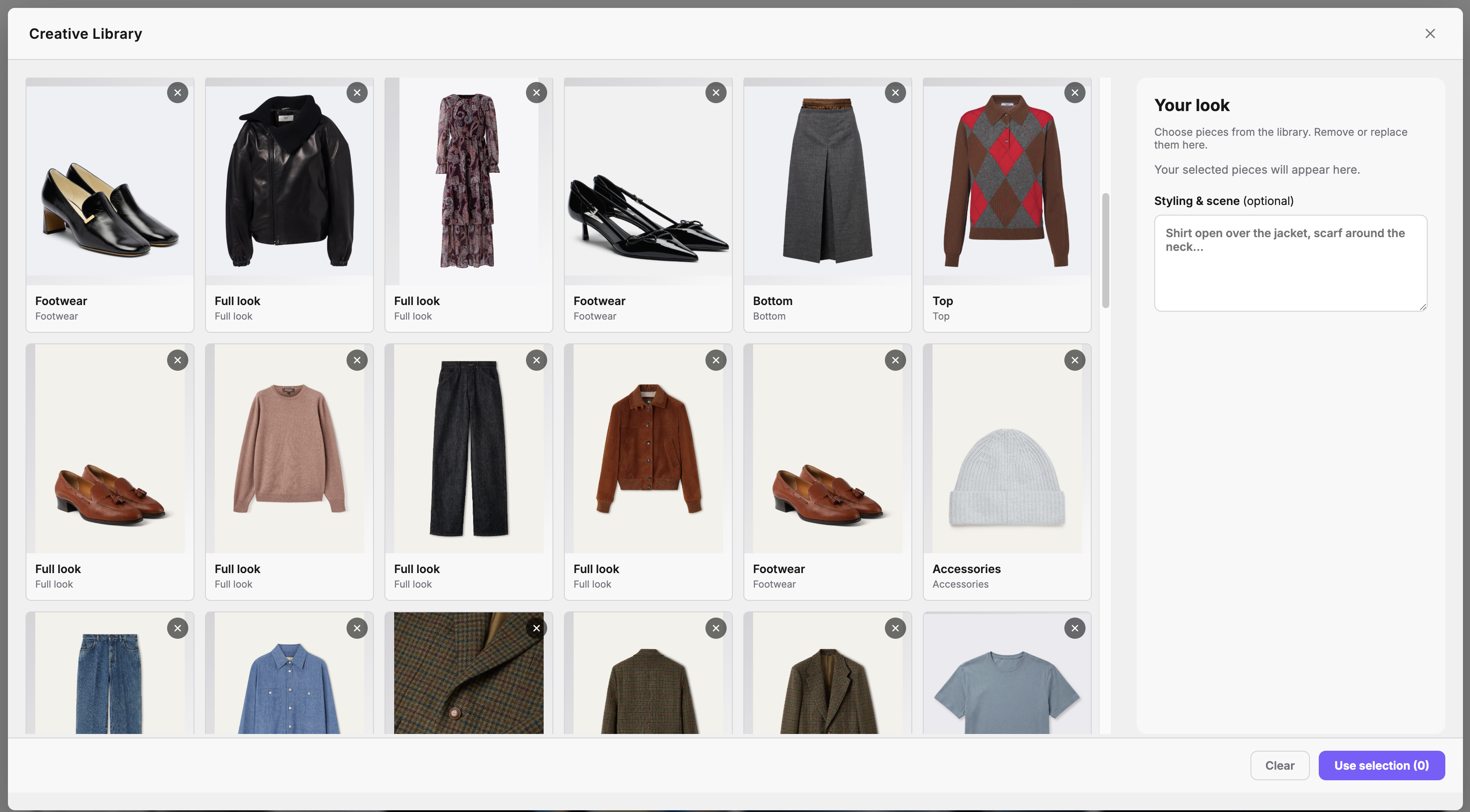
Prepare clear garment references
The garment is the source of truth. Use clean, high-resolution photographs and include the views needed to understand shape, construction, fabric, pattern, trims and distinctive details. A front image may describe the silhouette, but it cannot reliably explain a back closure, an asymmetric panel or the texture of a specific material.
03
Build one visual direction
Decide the world around the collection before producing the full series. Define casting, location, lighting, pose, camera distance, color treatment and emotional tone. References can communicate atmosphere and composition, but they should not silently replace the actual garment, model or location requested for the project.
Keep the direction specific enough to guide every image and open enough to produce variation. The goal is continuity, not repetition.
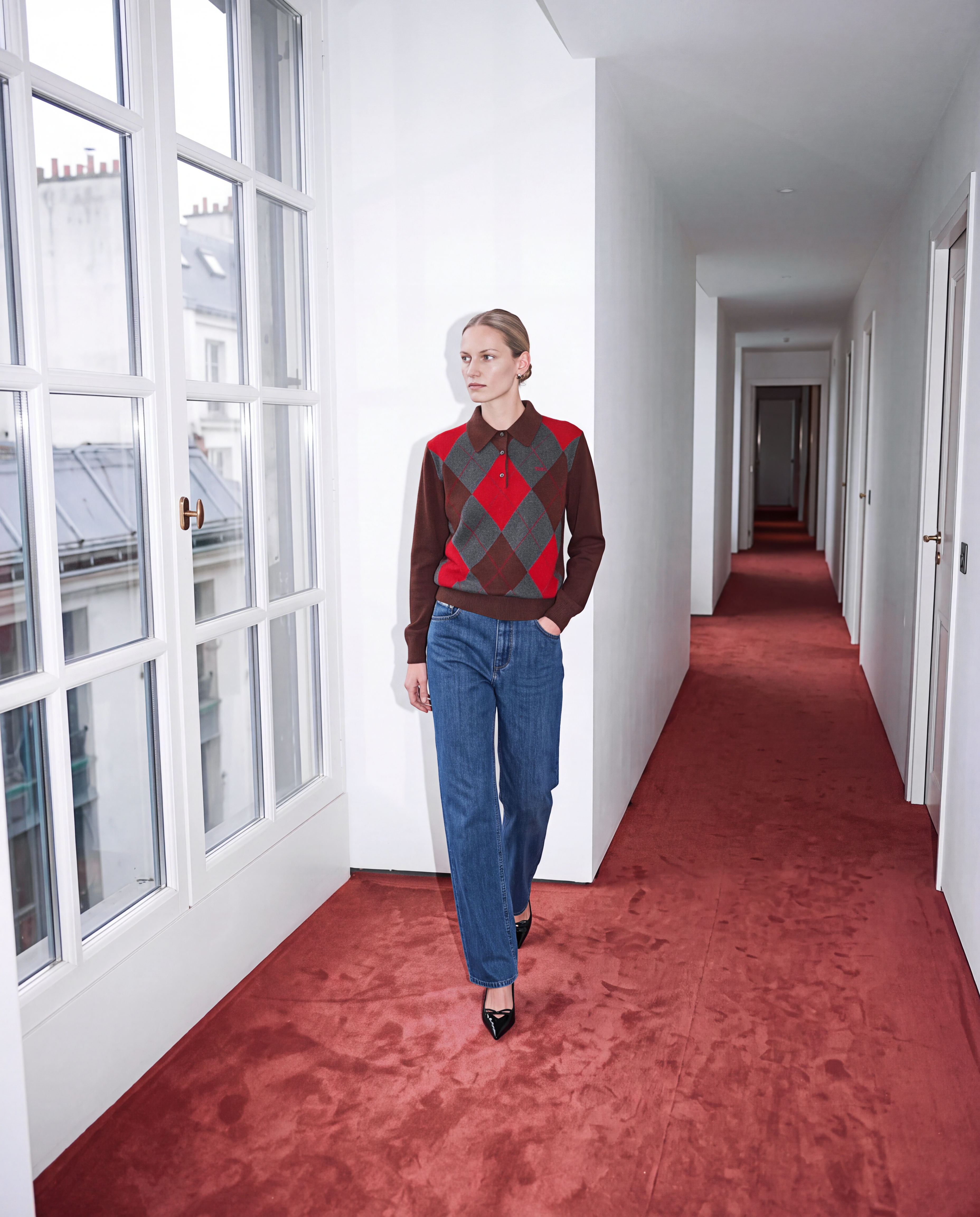
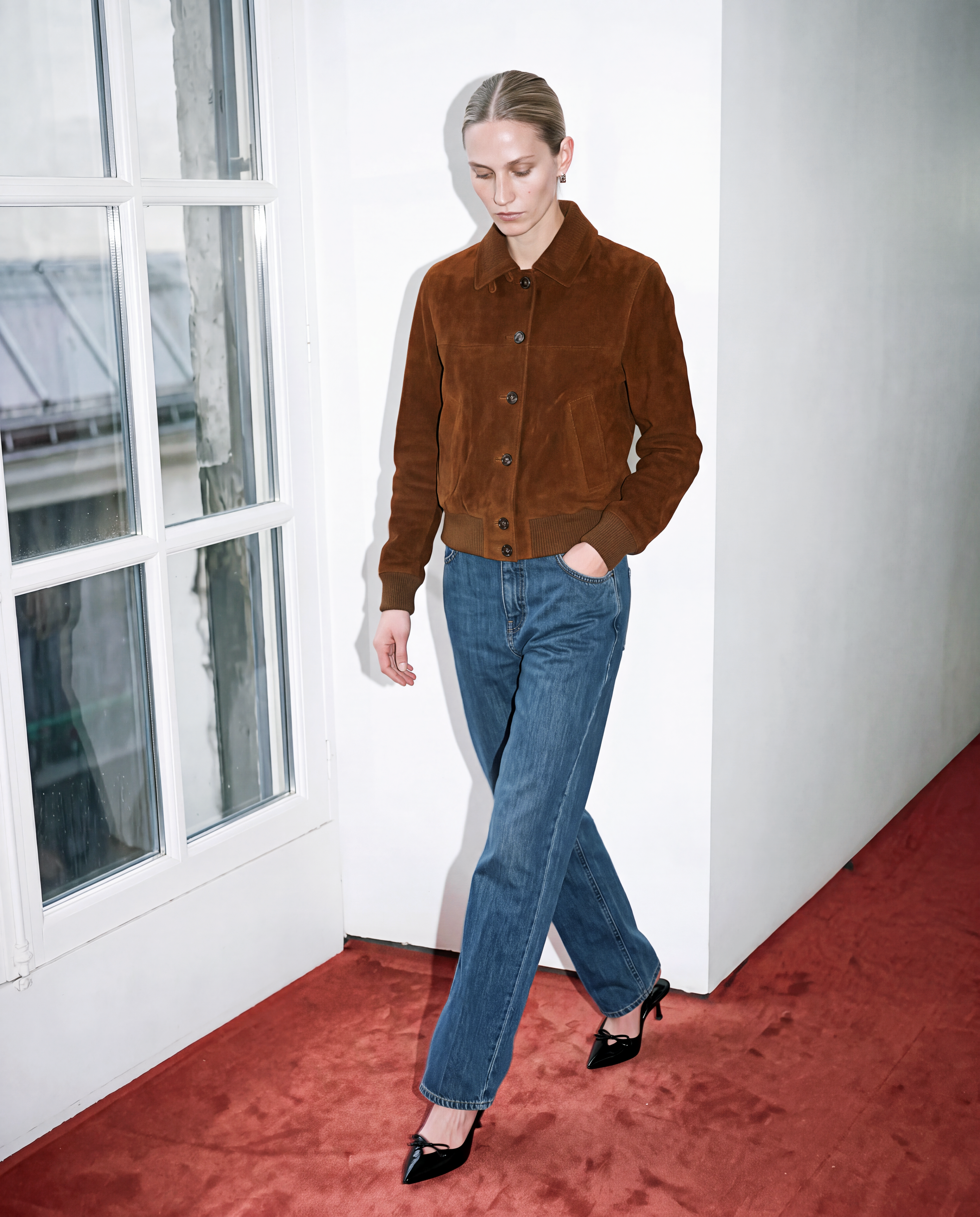
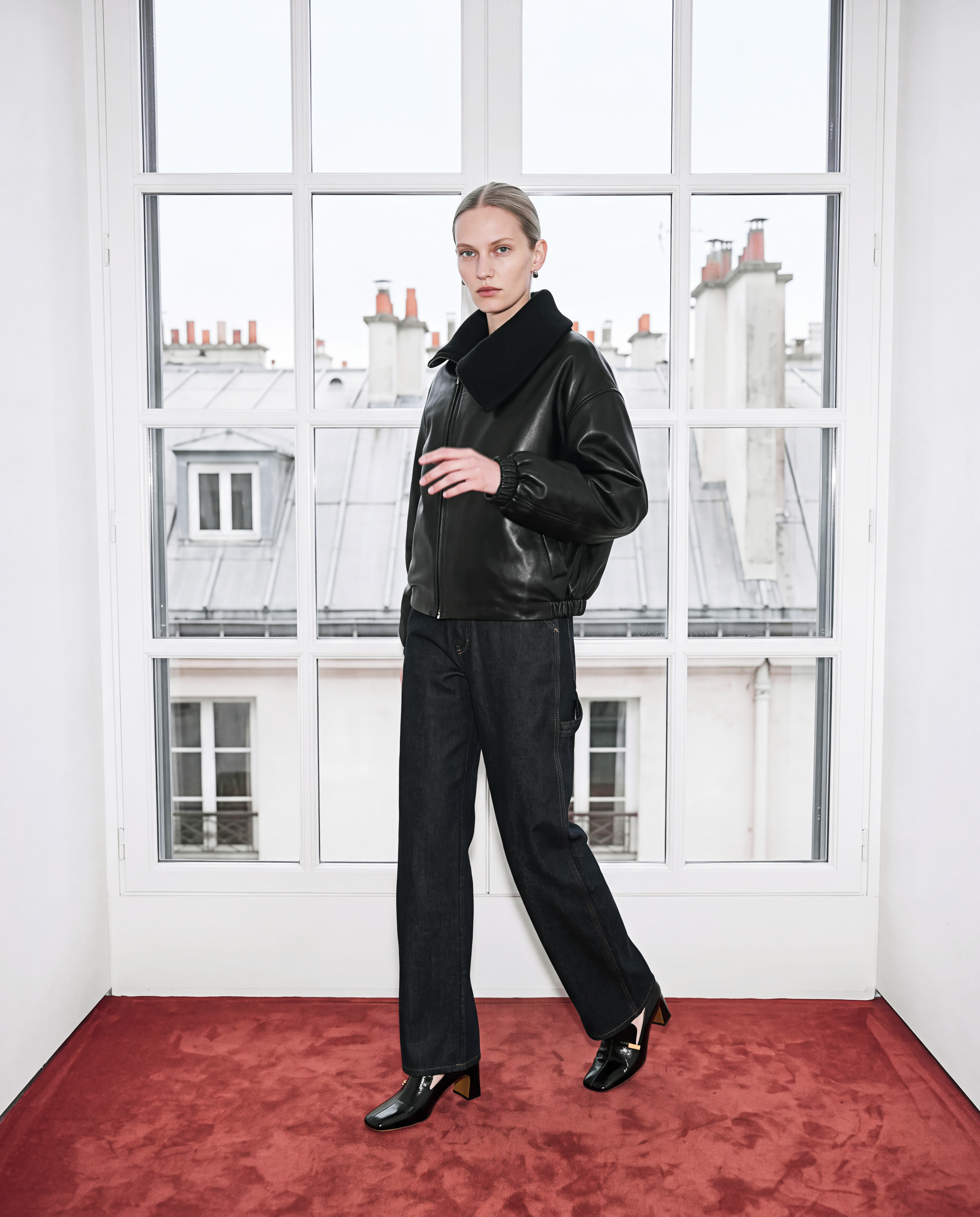
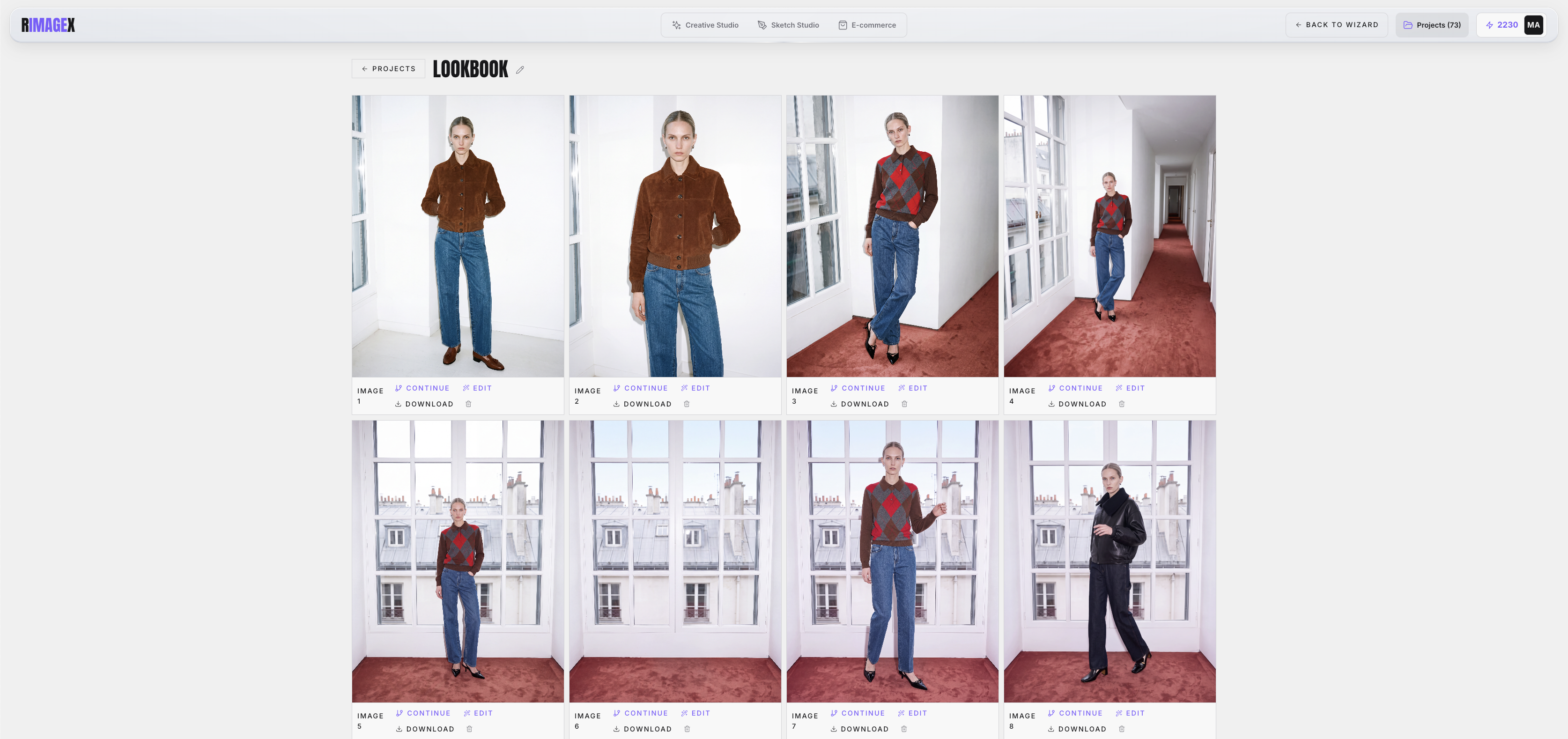
In the example shown here, the location was developed first and then reused as the spatial reference. Pose direction created variation while the same model identity, architectural details, daylight and red carpet held the story together.
04
Create and evaluate the first frame
Use RIMAGEX to combine the garment references with the selected model, pose, location, mood and light. Treat the first successful frame as the visual anchor for the lookbook. Before expanding the series, inspect the garment at full size and compare it with the original reference.
- Is the silhouette still correct?
- Are construction, layering and proportions preserved?
- Do fabric, pattern, color and finishes still belong to the real piece?
- Does the person feel physically present in the chosen light and location?
05
Produce a sequence, not isolated images
Reuse the approved direction and the same reference logic across the remaining looks. Change only the variables that give the sequence rhythm: camera distance, pose, crop or the relationship between the model and the space. If every variable changes at once, the collection loses identity.
A strong lookbook normally combines full looks, medium frames and selected details. The sequence should reveal the collection progressively rather than presenting every garment in exactly the same way.
06
Edit the final lookbook as one object
Review the images side by side. Remove frames that break the visual language, repeat information or weaken garment fidelity. Adjust the order so that silhouette, color and scale create a deliberate progression. The final edit is part of the creative direction—not an administrative step after generation.
RIMAGEX
Real garments. One coherent visual world.
RIMAGEX is built for fashion image production: combining garments, models, poses, locations, light and creative references while keeping the product at the center of the process.
Explore RIMAGEX ↗